Tuesday, January 29, 2013

New Reference Books on Manga


Manga is a type of Japanese comic book which covers many genres, with stories about everyday life or stories with adventures and action. They are an important part of Japanese popular culture with a steadily growing fan base in the West. I have read through a few, especially if someone recommends one in particular or gives it to me as a gift. I’ve liked the ones I’ve read pretty well, but I always felt like there were more things to learn about them. They seemed to be filled with so many cultural references and specific themes from within the genre. So I decided to examine one of our new reference books in the Critical Survey of Graphic Novels series, this one devoted to manga, and learn more about how they`re made and introduce myself to some of the more famous manga works.

Manga is, after all, very much a Japanese art form, and while I might know a little bit about Japanese culture, I am not at all an expert. This reference book entitled Manga (REF PN6725 .C756) can help me understand it a little bit more. It provides readers with a long list of manga works and gives their plots, characters, and themes, as well as their cultural impact.   I was actually somewhat surprised to see a few that I recognized, like Uzumaki, a really creepy story about a town possessed  by an evil spiral curse, and a series entitled Fullmetal Alchemist, some of which I watched as an anime (Japanese cartoons) and really enjoyed. Where Uzumaki is a trippy horror story, Fullmetal Alchemist is more of a magic steampunk adventure story.


I looked through the book, trying to get a feel for the genre. What really stands out to me is how well the book is put together. It is filled with pictures and information about the works being analyzed, with clear lists of major characters, plot summaries, and the basic themes. The second thing I noticed is how much variety there is in the manga genre. There are books for kids, with cute child protagonists who use magic to win school talent shows, books about the everyday lives of young women trying to succeed in both love and in the corporate world, and gritty stories about  crime and murder made for young adults and teenagers. Although I had heard of some of the books, like Death Note and Ghost in the Shell, I never knew much about them. This book can tell you just about everything you would want to know about these graphic novels themselves, as well as about their creators and how readers respond to them. I will warn you, however, if you read the plot summaries, they will have spoilers, as they basically outline everything that happens in the story from start to finish. Oh, and I don’t want to get into it too much, but there is some stuff of a more sexual nature described.  I`ll just leave it there. If you want more details, you can look it up yourself!
 
Give this book a look. It’s interesting, informative, and a good place to start if you are a fan of the manga genre or of Japanese culture. And by the way, if you enjoy this title, you might also appreciate its companion volume in the Critical Survey of Graphic Novels series, History, Theme, andTechnique (REF PN6725 .C7536).  Both titles are available in Rice Library’s Reference Collection, located on the library’s first floor.
CP


Monday, January 28, 2013

Literary Criticism and You


When you’re reading a work of fiction, how much do you think about it? Not just the basic stuff, like:  Is the plot interesting?, or who are the characters going to eventually hook up with? I mean, how much thought do you put into what is going on in the story, what the author is trying to say, and what the themes are? Well, that is a huge part of what goes on in literary criticism. Readers examine texts to find themes, ideas, and subtexts in the work.  They may even relate the work to the world outside the story, and what the book has to say about the world. If any of that sounds interesting (and as an English major, this is the stuff I live for), then you might be interested in the four new books in Salem Press’s Critical Insights series. These books are available to Rice Library users in both print and electronic formats. They include discussions of classic literature, such as The Iliad, The Odyssey, and Frankenstein, rather typical literary pieces, but they also analyze more contemporary works as well. 

One volume which includes a discussion of contemporary works is entitled Technology and Humanity (REF PN56.T37T43).  As an example, one essay references the movie Tron and its sequel Tron Legacy as it examines the relationship between programs and programmers. This isn’t just about computers and robots; it’s also about how technology has changed over time. The volume entitled Dystopia (REF PN56.D94D97) contains a series of essays about works that deal with a future gone amuck, often focusing on a growing issue in contemporary life.  The Natureand Environment volume (REF PS169.E25N38)deals with how we feel about nature, and how nature has been used literature. It has essays on both poetry about nature and fictional accounts of man’s struggle with nature, or man’s interest in it. In The Heros Quest Heros Quest volume (REFPN56.5.H45H53) contributing authors investigate one of the great literary themes, in fact one of the earliest plots in literature. It often involves a hero traveling great distances to achieve amazing feats of heroism.


So take a look at the books, in print or online, and spend more time analyzing what you read every day. It will not only help you in class, but also in appreciating whatever entertainment you happen to enjoy.
 
CP


Monday, January 21, 2013

A Walk through Time in Fashion

The collection will be on exhibit in the Wrights Administration Building through April. We hope you get an opportunity to see this rare collection on clothing as well as a unique hat and accessories display out side the University Archive & Special Collections on the 3rd floor of the Rice Library.


In 2012 the University Special Collections received a generous gift of historical clothing worn by generations of the Cooper/Beardsley/Montgomery/Gordon Family.  The Beardsley Collection, as it is known, includes not only the items on display here but also an assortment of women’s, men’s, and children’s clothing and accessories from the period 1860 through 1970. 


The matriarch of the family, Martha Cooper Beardsley (1831—1922), was born in Ithaca, New York, and married Sherman Miller Beardsley.  The Beardsleys had their second daughter Harriet “Hattie” Ethel Beardsley (1863—1959) and eventually the family relocated to the town of Bourbon in Douglas County, Illinois.


Hattie went on to marry a gentleman, James Montgomery, from Gibson County, Indiana and the young family relocated to Owensville, Indiana.  There the Montgomery’s had two daughters, Ruth Montgomery (1891—1975) and Martha Louisa.


Young Martha Louisa Montgomery (1899—1982) wed Ronald M. Gordon of Owensville and they went on to have four children.  The Gordon’s second child, James Montgomery Gordon (1926—2001), continued the line of the Cooper/Beardsley/ Montgomery/Gordon family.


This collection is gifted to the University Special Collections by James Gordon’s wife, Mrs. Evadean Gordon.  Mrs. Gordon has also shared her thorough documentation of the clothing as to the names of family members that wore the items during specific time periods.  This collection of historical clothing and accessories will continue to benefit the USI community as it tells the story of our region to future generations.

Susan Colaricci Sauls

Art Collection Registrar


Curator’s Statement


A personal love for fashion and vintage clothing made curating this exhibit an exciting endeavor!  The articles of clothing in this display were selected based on their integrity as vintage pieces, as well as what I believed would represent the wide range of clothing and accessories from the Beardsley Collection.  In addition, I considered how outfits would be coordinated and how separate items complimented each other best, despite being from different time periods.  At the end of my selection process, the pieces chosen from the collection spanned between the late 1890s through the early 1970s.  Today it is common to see fashion designers, celebrities, and the everyday person wear an outfit that mixes clothing made today with vintage pieces.


How does fashion convey a culture and its values?  While assembling and researching clothing for this exhibit, I thought about the similarities and differences between fashion from the time periods of the Beardsley Collection and present day fashion and what the similarities and differences indicate.  Many present day clothing designers are inspired by designs from the past.  Vintage silhouettes are a reoccurring contemporary fashion trend despite the fact that our society treats fashion as a sort of “fast food” that is quickly consumed and thrown out.  I have observed that consumers buy clothes at a higher rate than in earlier decades, yet clothes are not made with as much attention to detail and do not last as long.  As someone who is interested in fashion, I purchase vintage clothing because it is well made and more authentic than the imitation vintage items found at popular retailers.


The Beardsley Collection indicates that society in a previous era put a great deal of importance on dressing in a complete outfit from head to toe and valued and cared for their clothing.  They believed it was important to keep something that was well made and now preserves history.  Before curating this exhibit I had an interest in vintage fashion and now after this experience I see that fashion is continually changing while being inspired by the past.


Adrienne M. Eades

James A. Sanders Fellow

2012--2013


Friday, January 18, 2013

Wacky Foods


So. I really do love reference books. You never know what you're going to find when you open one up. Like, when I opened up an e-book we have here at the library called They eat that? A cultural encyclopedia of weird and exotic food from around the world. I looked at its table of contents, and you know what first catches my eye? On their list of contents, a list of which foods they are going to be talking about? The chapter called "humans". Humans. In the food section. I couldn't even focus on the camel chapter, or the brains, or other such things I think were served in the dinner scene in Indiana Jones and the Temple of Doom. But, let's get back to that later. I think we all need to take a second and thank the food gods that most of the food from around the world is actually delicious and interesting, and not....monkey heads or humans flesh.

One place to find interesting and tasty foods would be the international food festival held yearly by USI`s International Club. You can wander the room, and find all sorts of great foods from everywhere from Germany to Saudi Arabia to Ethiopia. When I first went, some of the foods certainly gave me pause, particularly one dish made out of eggplant, hummus, and....some meat thing that I distinctly remember. It was amazingly tasty. But that's not the only time the International Club gives students an opportunity to try some new foods from different places! They also offer culture nights thoughout the year, focusing each time on a different culture, and usually run by students from those particular countries. And yes, they usually offer food from said cultures.

Have you done all that, and now you're interested in learning more about foreign food items? Lets get back to that book. I skipped right over to the "Humans" seaction, and it turns out its not a  cookbook known as "To Serve Man", its actually a history of cannibalism and its historical context in history and religion. Oh, and then they talk alot about the details of cannibalism, what parts people have preferred, and I am just going to stop there and skip over to the part where we hear about eating bone marrow and cactus and seal flippers. Because that all sounds incredebly appetizing. Alright, I might try cactus, that sounds kind of good. The foods listed range from creepy sounding, to actually pretty tasty, and no matter what, it's all done in a way that is filled with historical and social context, keeping the book from seeming like it's just pointing at the "weirdo foreign food" and laughing, and actually makes the foods sound, if nothing else, interesting. It makes you want to learn more about these foods, and the cultures they come from. People generally have reasons why they eat  certain things (like Balut, a fertilized duck egg that has an almost completely developed fetus inside of it, which in the US was an eating challenge on Fear Factor, but in the Philippines is considered a tasty snack that is known to give people a big burst of energy in the middle of the day, having been eaten there for generations). The internet tells me that things like bats and camels are actually quite delicious if prepared right, and several cultures have been eating them for years. Weird food is all relative (I know people on the East Coast who are mystified by the idea of drinking sweet tea) and learning about the foods of other cultures can give you some ideas about the culture itself. Now, the foods served by USI`s international club events will probably not be quite that out of the box, but they are a good way to see what other cultures eat, and what that means to them. This is what I love both about college and reference books. You never know fully what you're getting into, but if you keep an open mind, you can learn way more than you ever expected. So try something different to eat, and you may be surprised. Just, avoid the human handburgers. Just....no.

CP

Tuesday, January 15, 2013

New Year, New Computers


Anyone notice anything different about the library now that we`re back from break? That’s right, new computers! New shiny computers with big screens, and a faster internet speed! But what is really so different between our old computers and the new? Well let’s find out! Starting with the technical stuff…

These new computers have a 3.10 GHz memory, and a DVDET read and write drive. What’s really cool is that you can now charge your phone on the computer, and you don’t have to find a corner with a charger to do it! Just remember to bring your charger cord, and you are good to go! The internet has also improved, moving faster than the earlier computers(shown to the right), which only had (let’s be honest), slow internet, basic USB ports, and 17 inch screens. Our new computers have a 23 inch screen, a faster internet connection, and more advanced USB ports, which allow you to charge your phone, camera, or other such things.

So what does that mean for the students? Well, it means that the library listens when students ask for change. Over the last few years, several students have complained that our old computers were outdated, had small screens, and very slow internet. The library listened, and now we have these new ones! They're an example of the great support the library receives from our friends at Information Technology. They are newer, more convenient, and while they won’t totally revolutionize the lives of students here, I think they will make things a little more pleasant. So what’s the message here? If you have a problem with something in the library, just say something, and hopefully we can all work together to make the library better for everyone! Talk to someone at the reference desk, or maybe send an email; I hear the internet is really quick here these days! Oh, and one more thing. Don’t forget to name and save everything if you leave your computer to get a drink or tell the guy who is STILL blasting Nickelback on his headphones to turn it down, because the computers will still log you off if there is no activity for a while. Some things never change.

CP


Do you Downton?


We, as Americans, are really interested in England. Maybe it’s some sort of appreciation for the country that is almost our cultural parent (we were originally an English colony remember, and the early Americans based a lot of their culture and habits on England). It seems we think of it as a sort of classier version of America. It has lords and ladies and estates, and families that go back 400 years and more, and that history interests us. Americans fought a whole war to get away from England, and yet now, we just can't get enough of it.  I suppose we have always had a fascination with our friends on the other side of the pond, but recently, it seems like it's really been kicking up a notch. Everything from films like The King's Speech or the James Bond franchise, to Harry Potter to One Direction, the current pop group making young girls swoon, our culture is filled to the brim with British imports. Just look at the media's obsession with Kate Middleton and the royal family, and the constant coverage of the 2012 London Olympics. So, what is going on here? Why is the current generation so obsessed with the British and their history and culture? Maybe because it has an exciting foreign-ness to it, with its long history and class system, and its strange style of comedy that is one part Monty Python, and one part Ricky Gervais? Maybe this American generation of 20-somethings are just tired of their own country, with our divides in government and social problems, and what seems like an endless parade of awful blockbusters and remakes in our theaters, and horrifying reality shows crowding our TV, so they're looking at England, just assuming that maybe they have it together more than we do, with their accents and tea and their quirky British humor.

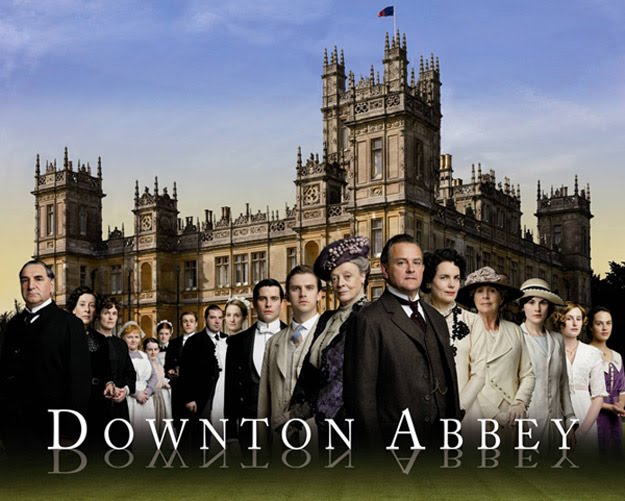
This could help explain the success of the British period drama Downton Abbey, a BBC series which follows the lives of the wealthy, blue-blooded Crawley family, and its various servants and employees, starting with the sinking of the Titanic in 1912, and progressing through World War 1, and now, in its third season, they've made it all the way to 1921. It has British stuffiness, family drama, romance, and the British class system, which seems to be rapidly changing as the show continues. At one point, this show might have gotten some fans in the USA, and become something of a cult hit, but right now? It's a massive success, with record DVD sales, and huge ratings when the most recent season premiered on PBS recently. It has been discussed on internet blogs by hipster 20-something reviewers, as well as among soccer moms at Wal-Mart. It`s all over the place. 
 
Do you already like the show, and want to find people who watch as well? Then come by the library`s Masterpiece Theater Discussion Group, led by librarians Phil Orr and Mona Meyer, on Tuesdays at noon in UC 206. You don’t have to have seen the most recent episode to join in, but beware- there will be spoilers! The show airs at 8:00 pm on PBS on Sunday nights, and you can catch up on the PBS website the next day if you're doing something else Sunday nights! The website also has a lot of good stuff about the show, with pictures, information about characters and cast members, discussion boards, and extra videos. And just to remind you, the library has a great display out right now on the main floor near the elevators, both about the show itself, and about the time period it's set in.

 
If you’re a fan of the show, you might be interested in some of these books that are in the display. If you'd like to check one out, just ask at Checkout.


"Penguin Book of First World War Stories"
- A series of short true stories from World War 1, all involving the British, and the variety of experiences they had during the first Great War.
 
"What the Butler Saw; two hundred and fifty years of the servant problem"
- A look at the lives of servants from the 18th and 19th century, using articles, first hand written accounts, and literature to get a picture of what life was like for the serving class.
"Titanic, first accounts"
- First hand accounts by survivors about the sinking of the infamous ship, debunking myths and telling stories about what they saw as the ship sank.
 
"Notes from a Small Island"
- A funny, and occasionally touching novel by an American writer who, after living in England for several years, decided to travel the nation and write about what he saw before returning to the USA. A good look at contemporary life in the UK.
 CP


Tuesday, December 18, 2012

Continued Coverage of Holiday Reading Cheer!


So, it’s still the holiday season, and guess what? More holidays! More traditions! More awkward small talk with your extended family you  only see once a year! Today, we discuss a number of classic holidays, from religious to cultural to just plain fun; it’s amazing how many ways people celebrate during this season! Hey, it beats talking about finals again so let’s take a look!

Hanukkah! [ BM695.H3 F685 1999]

  It’s a pop-up book! About Hanukkah! Alright, so it’s a kids book, and it’s informative and tells the story of Hanukkah, but look at the pictures! They`re so pretty and they pop up! So ok, the actual book tells the story of the Jewish holiday of Hanukkah. Here’s the CliffsNotes version: Basically, around 2000 years ago, the Jewish homeland was being occupied by the Greek army, and even worse, the Greek army vandalized the sacred Jewish temples, threw out the Jewish worshippers, and sacrificed pigs on their altar. Which, to me, sounds pretty gross no matter your culture, but to the Jewish faith, it’s an especially big insult. So, tired of being oppressed, a guy named Judah Maccabee and a small group decided to fight back. Long story short, they kicked the Greeks out, and held a celebration in their temple. In this book, this story has a lot more details, and, more importantly, it’s full of great pictures! But the big moment is when they try to light the Menorah, and realize they only have enough oil for one day! And it will take days to run to ancient Walmart to get more! Luckily, a miracle happens, and the candle burned for eight days straight, until the Walmart run could come back with more oil. So yeah, the whole story is much cooler than a quick summary, so check it out- in pop-up form!
 

For some reason, it seems like if you want any good information on holidays, the best place to look is children’s literature with exclamation points in their titles. I guess they just work better with pretty pictures, I don’t know. Like in this book, which is talking about the many traditions of the African American holiday of Kwanzaa. It takes the reader step by step through the multiple-day celebration of African American culture and African heritage, complete with sayings, games, and pictures. Each chapter takes you through one of the 7 days of Kwanzaa, telling about each one's meaning (unity, purpose, faith, creativity, etc.) and what everything they do symbolizes (candles, African sayings and songs, handmade gifts and books). This book also has a number of stories in it, both old African folk tales, and more modern real-life stories of great African Americans, along with lots of pictures. And at the end, it shows a number of Kwanzaa games, foods, and other fun things for kids to do. If you’re interested in learning more about the history of how Kwanzaa came to be, with its ties to the black power movement in the 1960s, this book sort of skips over a lot of the political stuff that came with the creation of this holiday, so it might not be for you. But if you’re interested more in the actual traditions and cultural ties to Africa and African American culture, this seems like a good place to start!
 
  Dear lord does that sound like an exciting read! But honestly, as something of a history dork, I love learning about the lives of average people living in the past, or people living in different places. That includes how people celebrate their holidays! Unlike the previously mentioned kids’ books, this is pretty dry information about various holidays, but it’s still good reading. You can learn about the winter holidays of everyone from the ancient Norwegians, to the colonial Americans to the South Americans' Moon Pie Festival. There are lots of discussions of traditions, histories, and cultures, which, while not super exciting, will give you lots of good information if you’re looking to learn more ways to celebrate! Not to mention this is a pretty nifty encyclopedia for that multicultural speech in CMST 101!

 Well, looks like I'm signing off for 2012. It’s been a blast being your blogger, and I can’t wait to continue next year! Have a good break, and be sure to stop by the library (and my blog) when you get back! See you guys!
 
CP


Monday, December 10, 2012

Christmas Time Reading


It's Holiday season! Gifts, decorating, family, friends, music- it’s a great time of year! And what better way to celebrate than at the library! There are lots of things right here full of stories, information, and history of just about every holiday you can find. In order to continue spreading that holiday cheer, I’m here to show you some great reads for your holiday season. Whether you want to learn more about the history of certain holidays, get some yummy recipes, or just chill with a good holiday story, there are tons of places to look for that festive read. May I offer you some Christmas hors d'oeuvres?

Encyclopedia of Christmas [ REF GT4985 .G79 2000] 
 
Ever had a desire to know why we write letters to Santa, use holly and ivy to decorate, or why Christmas in America was at first condemned by the early church? Then check this book out, which gives tons of information about the holiday season, and all the wackiness that seems to follow it. It talks about how we have gotten most of our Christmas traditions, as well as traditions from other times and places. For example, did you know that the mistletoe as a Christmas sign comes from Norse mythology, but kissing under it comes from Britain? Did you know that when “The Nutcracker” debuted in 1892, audiences hated it, and the ballet was almost closed down? The only reason we know about it today is because Tsar Alexander III happened to like it and insisted it continue. Did you know that pretty much everything we know about Christmas tree decorating comes from Germany? Flip through this book to learn even more little-known facts to amaze your friends during awkward pauses at your Christmas party!

Plum Pudding Murder-Joanne Fluke  [available in Popular Reading, 1st floor]

 Looking for a nice light read to take a look at in between wrapping presents and drinking that third thing of eggnog? This paperback, part of Fluke's Hannah Swensen mystery series, is the tale of said Hannah, a small town baker who almost always seems to stumble into mysteries, in between baking cookies, dealing with her wacky town, and looking for love. In this story, a Yuletide murder takes place in the middle of her town's Christmas carnival, and Hannah has to figure out who the killer is before the 12 days of Christmas ends! It's light and breezy and cozy, a perfect little book to read when you just want to unwind. It also has several Christmas recipes in it, that sound quite tasty and a lot easier than most of what I have attempted off of Pinterest! And more festive!
 
The Man Who Invented Christmas: How Charles Dickens's A Christmas Carol Rescued his Career and Revived our Holiday Spirits- Les Stanford  [ebrary Academic Complete Online Access]
 
You’ve read A Christmas Carol right? The timeless, much adapted, much parodied tale of a grumpy old rich guy who is shown the true meaning of Christmas by three spirits, and then vows to change his ways. It’s an archetypal Christmas story, and has shaped not only what we know about Christmas, but also what we know about the time period it's set in, The Victorian Era, a time of street urchins, top hats, and endless emotional and sexual repression. But what’s really interesting is the story behind A Christmas Carol, and how much of an impact it really had. In this e-book, it discusses more about how Dickens began his career as a writer, his early life, and how he came to write his classic novel. Dickens' novel wasn’t just huge, it changed Christmas and how we celebrate it forever. It’s an interesting read if you like Dickens, history, or are interested in how Scrooge, Tiny Tim, and the rest of the gang changed culture forever.  
 
 CP


Thursday, December 6, 2012

Temporarily turn off your left brain and turn on your right


Looking for a way to unwind a little before finals? Tired of my constant blog posts that are turning quickly into a metaphor about my increasingly stressful schedule?  Well, the library can help! Again! Starting today, Thursday, the library will be having its Unplug and Unwind program, dedicated to helping students release stress, and have a little fun in between studying, papers, and coffee breaks. First off, there is the Wall of Frustration! The library has put up big sheets of paper in Labs A and B, that are basically big Facebook Walls, totally dedicated to complaining about finals and how much they rot.  Grab a pen and rant, rave, and vent about the many horrors and pains of finals season. Or, if you feel like being more positive, just write your name, draw a picture of a puppy, start a game of tic-tac-toe, or wish everyone a Merry Christmas. Show everyone that finals won't get you down! Or at least, you're going to try not to let them get you down. Read what other students are feeling, and agree or disagree with them. It’s nice to know that as the finals week madness descends, at least we aren’t alone.

Done writing “Finals are LAME” and drawing pictures of your professor with horns on his head? Grab a coloring book and get creative! The library is offering coloring books, crayons, and puzzles to play around and release your inner child, who has never even heard of finals! You can come and color with books featuring Christmas, Disney, and Sesame Street! That’s just hard to beat! Then grab a puzzle book and play some games, fun puzzle game that have absolutely nothing to do with finals. While just little things, it’s great to just do something fun and silly to get your mind off the most stressful time of the year. Play with a puzzle, color some pictures, and vent out some frustration. All these goodies are on the map cases in Popular Materials on the first floor.


Sounds pretty good right? But wait, there’s more! Hanging out at the library, and suddenly in need of some holiday cheer? Well, our buddy Archie the Eagle will be flying around the library, handing out candy canes to students who look like they could use some cheer! So come hang with Archie, eat some candy canes, play games, color pictures, or vent about finals. Oh, and let’s not forget to be nice and respectful to your fellow students at the library this week. It’s cool to try to lighten up the mood, but don’t be too loud with talking or music, no one needs the extra distractions this week as they try to stare a hole into their anatomy book. If you find yourself stuck by someone who doesn’t really get this, you can pick up some earplugs from the front desk! Or if you just want complete quiet in the library, whatever helps you most. Just remember, while normally I am sure everyone on the third floor would love to hear your weekend plans, or that awesome "Jingle Bells - Call Me Maybe" remix, save those 'til after finals. Don’t be that guy/girl.

 CP
 

Tuesday, December 4, 2012

A Continued Guide to Fighting Finals

So I don't know if I have mentioned this yet, but it's finals season. Finals season is not very pleasent. I have already written two blogs here about ways to make this week and a half just a little less like one giant emotional break down, but I can't lie, it's going to be tough, no matter what you do. However, there are ways to get through it. I have already talked about movies to watch, and music to listen to, now it's time to talk about some other easy ways to relax, relieve a little stress, and at least take a few calming breaths.

Aromatherapy

You may or may not have heard about Aromatherapy, which is basically the science of using scents to solve problems. Well, that’s the shortened version. But certain scents have been known to make people really feel better, calmer, or even healthier. There are a lot of different places to look if you want try Aromatherapy, including right here! One place to look is the internet, which has lots of sites to find directions on using Aromatherapy in the best way possible.
 http://oxford-consultants.tripod.com/Aromatherapy50ways.htm is a newsletter that has an excellent list of different oils and scents and how to specifically use them to cure anything from stress to headaches to memory problems. These scents can be found anywhere, even Wal-Mart, so go ahead and check it out. Worst case scenario, you walk into finals smelling like vanilla. Maybe your professor will appreciate the smell as you turn your test in.
 
Yoga
 
You might not think about it very much, but exercise actually is very important when you’re trying to get a lot of school work done. Exercise can reduce stress chemically, with the sweat and motion relieving your body of negative energy. At least, according to the internet. This is what led me to yoga, a relaxing exercise routine that combines stretching, meditation, and movement to be both a workout, and a stress reliever. If you don’t have time to take one of the classes offered at the REC, here are a few books we have here to help you get started on your own!
15 Minute Gentle Yoga- Louise Grime: [e-book from Safari Online]
Yoga: A Gateway to Curb Social Evils-Ramesh Kumar [e-book from ebrary]   p.s. the title alone should make you want to bend yourself like a pretzel!
 
Alternative Medicine
 
 If you are interested in learning more about Aromatherapy, yoga, or any other ways to calm yourself before you start banging your head against the nearest hard surface, there are many places to go to get more information. Check out Complementary and Alternative Medicine ( REF R735 .C66 2010) by Amy L. Sutton. It’s filled with information on meditation, music therapy, dietary therepy, and herbal remedies. It’s a pretty clinical book, so if you wanted to learn how to actually practice a lot of these things, you might want to look around a bit more for information, but this is a very good place to start! Now you might be rolling your eyes a bit at all the “New Age” stuff, but it’s not a bunch of just pointless techniques that hipsters like to throw around, this is all pretty legit. At least give some of them a try. Again, better than damaging your wall as you smash your head against it.

CP